The science behind Lexy
We don't believe in secret proprietary methods or magic pills. The architecture of every 5-minute Lexy lesson rests on forty years of foundational research into memory and applied linguistics.
Studies Lexy Disagrees With: Three Things We Deliberately Do Differently
Science does not always offer simple answers for real-world fluency. We examine three well-known studies that Lexy deliberately contradicts, and the pedagogical trade-offs behind each choice.
5 Language Learning Myths That Don't Hold Up to Research
Learning styles, Duolingo, growth mindset, highlighting: five popular beliefs examined through meta-analyses. What does not hold up and what works instead.
Pronunciation Training in Second Language Acquisition: What 86 Studies Show
Pronunciation instruction yields d=0.89 across 86 studies. Here is what the research says about perceptual training, ASR feedback, and transfer to untrained sounds.
AI Conversation Partners in Language Learning: What Randomized Studies Show
Can an AI replace a language tutor? 28 randomized studies say: partly. Effect size g=0.484: here's what that means for your practice.
Spaced Repetition and Retrieval Practice: What the Research Actually Says
Cramming feels productive but the data disagree. 47 studies with 6,801 participants show retrieving beats re-reading—and the gap widens on delayed tests.
The Science of Language Learning: Evidence-Based Methods and Popular Myths
We review meta-analyses on what really works for language learning — spaced repetition, TBLT, AI — and what is merely myth.
Language Coaching vs Traditional Tutoring: Why Adults Don’t Need School-Style Lessons
How language coaching differs from tutoring, why traditional homework models cause adult burnout, and how learner autonomy fuels rapid language gains.
The Talker Variability Effect: Why Learning from Multiple Speakers Speeds Up Listening
Why single-tutor practice limits listening skills, how the HVPT method sharpens speech perception, and why hearing multiple voices matters.
Top 10 Language Learning Apps in 2026: Unbiased Comparison & Ranking
Comprehensive comparison of the 10 best language learning apps in 2026 (Lexy, Duolingo, LingQ by Steve Kaufmann, Ziggy, Polyglot 16 and more): speaking practice, grammar, pricing, pros, and cons analyzed.
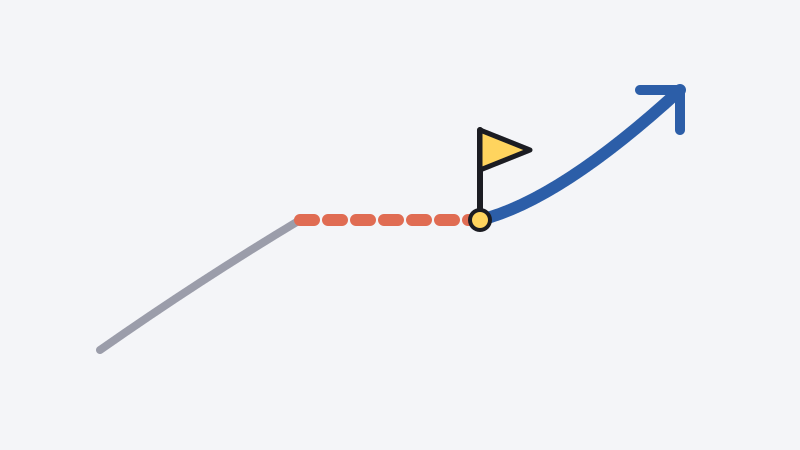
The Language Plateau: Why Progress Stalls at B1 and How to Break Through
Why foreign language progress stalls at B1, the science of speech fossilization, and how roleplay simulations overcome the intermediate plateau.
The Reciprocal Questioning Effect: Why Answering Questions Won’t Make You Fluent
Conversation Analysis research: why answering questions fails to build fluency and how Lexy’s counter-question protocol develops confidence.
Overcoming the Language Freeze Abroad: Why Flashcards Fail and How Lexy Prepares You for Real Travel
Why vocabulary apps leave travelers speechless at hotel check-in, what science reveals about speech arrest, and how simulated dialogue builds spontaneous fluency.
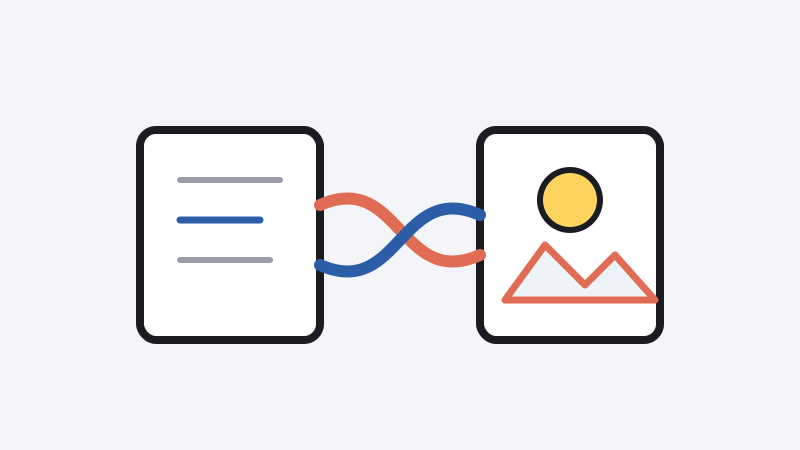
Dual-Coding Theory: Why Flashcards Fail and How 5-Stage Multimodal Learning Works
Allan Paivio cognitive research: why isolated flashcard swiping fails and how Lexy’s 5-stage cycle locks vocabulary into long-term memory.
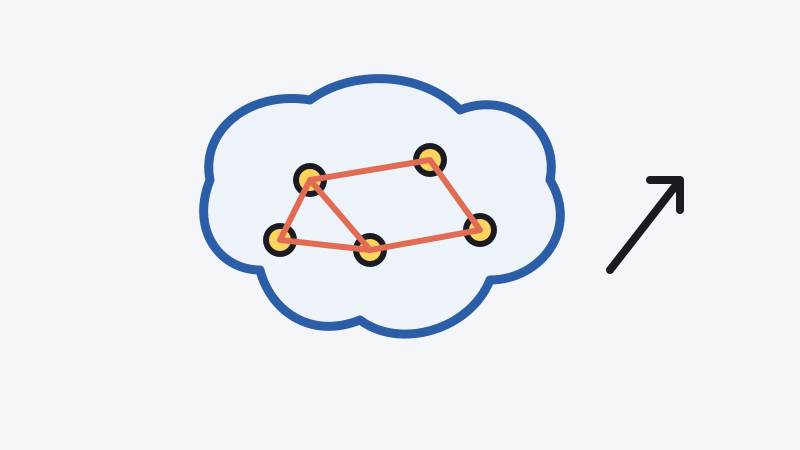
The Critical Period Myth: Why Adults Learn Languages Faster Than Children
MIT research by Joshua Hartshorne: why the adult brain grasps foreign language syntax and vocabulary faster than children.
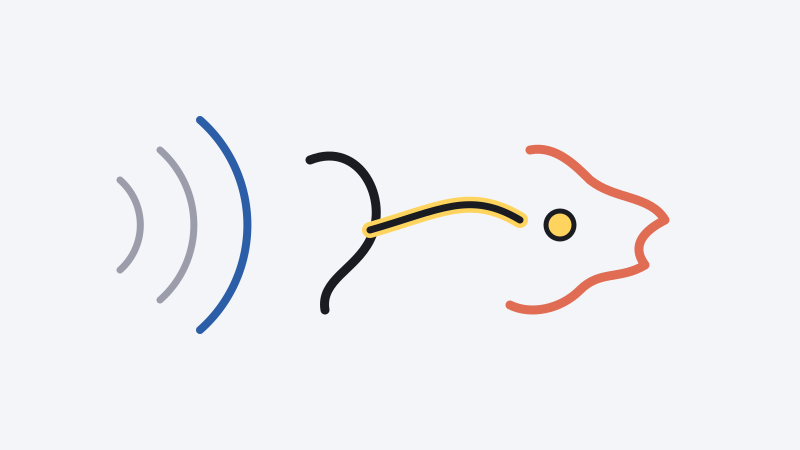
The Motor Theory of Speech Perception: Why Speaking Aloud Unlocks Listening
Haskins Laboratories research: why passive listening fails and how speaking aloud trains the auditory cortex.
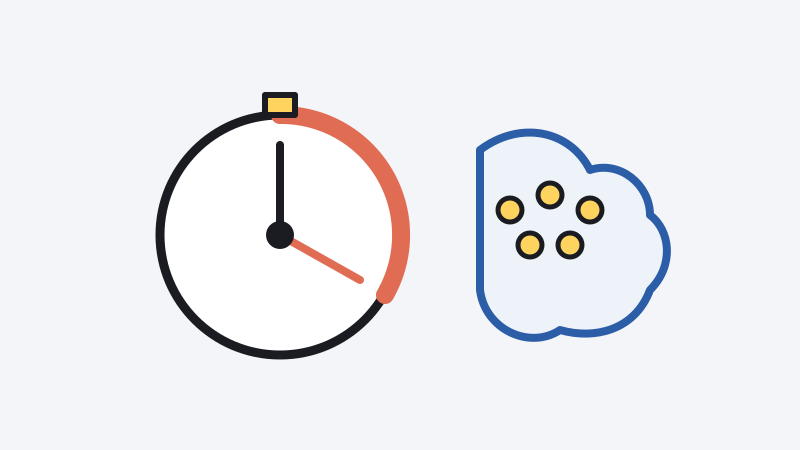
Cognitive Load Theory: Why Language Lessons Must Last Exactly 25 Minutes
John Sweller research: why 90-minute tutoring sessions exhaust working memory while 25 focused minutes produce lasting fluency.
The Affective Filter Hypothesis: Why Error Correction Blocks Speech
Stephen Krashen research on why fear of errors shuts down working memory and why Lexy eliminates corrections in lessons 1–15.
Why Expats and Digital Nomads Should Learn the Local Language Even for a Month
Why English and translation apps fall short in Asia and Europe, how 100 conversational phrases dismantle the tourist markup, and how to start speaking in 16 days.
The Polyglot Method: How Polyglots Master Languages Quickly and Why Lexy Uses Their Approach
5 fundamental laws of fluency from people who speak 10–20 languages: why they skip grammar tables, ask counter-questions, and why a Lexy lesson lasts 25 minutes.
Why Duolingo Won’t Teach You to Speak: Product Traps & Speech Science
A review of independent research: why 5 minutes of quizzes creates an illusion of mastery, why recognition is not speech, and how to escape the gamification trap.

Broca’s and Wernicke’s areas: how the brain actually learns a language
Why the two-box model is retired, how the adult brain builds dedicated circuits for a second language, and what HD-tDCS and fMRI experiments reveal.

The production effect: why words stick only when you say them out loud
A reading of Professor Colin MacLeod's eight experiments: why saying a word aloud leaves a triple sensorimotor trace that silent reading cannot match.

The testing effect: why active recall beats rereading three times over
The Washington University experiment: why rereading your notes creates an illusion of knowing, while an unaided test holds 80% of the material a week later.

The output hypothesis: why passive listening never teaches you to speak
Canada's immersion-school research: why understanding runs on guesswork (semantics) while your own speech forces you to assemble grammar (syntax).

Language anxiety: why on-the-fly corrections freeze spoken output
The FLCAS scale and the affective filter: how fear of a teacher's critique shuts down Broca's area, and why Lexy leaves you uncorrected for 15 lessons.

Distributed practice: why a 25-minute lesson beats a two-hour weekend cram
A century of research across 317 studies: synaptic consolidation during sleep and why sixteen short lessons outpace marathon cram sessions.

Spaced learning in second-language acquisition: a meta-analysis of 48 studies
3,411 learners in Language Learning: a massive g = 0.81 effect size for vocabulary and grammar when expanding intervals are put to work.
Put the science to the test
In Lexy the first two lessons of any of the 49 languages are free. The first one opens with no sign-up: press the button, allow the microphone and start speaking right now. No bank card needed.