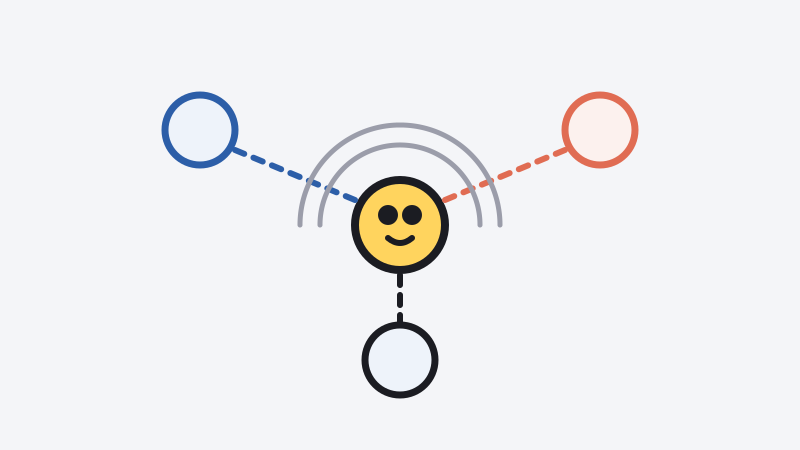
Many students practice with a single tutor for months, understanding their speech effortlessly, yet freeze when spoken to by a stranger abroad. This is not a lack of aptitude: the auditory cortex adapted to one narrow acoustic template and remained unprepared for real-world speech variety.
The HVPT Method: Why One Voice Narrows Perception
In 1991, cognitive researchers John Logan, Scott Lively, and David Pisoni introduced High Variability Phonetic Training (HVPT). Their experiments revealed that training auditory perception on a single speaker induces talker-dependent learning.
The brain attunes to that individual’s pitch, cadence, and subtle articulation patterns. Faced with an unfamiliar speaker, the auditory system must re-decode the signal from scratch.
In contrast, learners trained on 5–6 distinct speakers (male and female, varying paces and dialects) achieved rapid acoustic generalization. Furthermore, Professor Ann Bradlow demonstrated that multi-talker auditory training directly enhances the learner’s own spoken pronunciation.
Acoustic Generalization in Long-Term Memory
Studies by Joe Barcroft and Mitchell Sommers (2005) confirmed that acoustic variability accelerates vocabulary retention. Hearing unfamiliar words in multiple timbres strips away extraneous acoustic noise, anchoring the invariant phonological core of the word.
Escuela’s Multimodal Practice and Lexy’s Architecture
Capitalizing on speaker variability is central to modern communicative pedagogy.
Our partner school escuela.pro pioneers a multimodal approach in Spanish instruction (escuela.pro/multi-modal-approach-in-spanish). In Escuela, students practice with native instructors from Spain, Mexico, Argentina, and Colombia. This prevents single-speaker bias and builds resilient real-world comprehension.
Lexy integrates this cognitive principle directly into its learning architecture:
- Two-voice dialogues (Polyglot Listening): Stage 5 (Dialogue) in every lesson presents dialogues between contrasting voices, developing flexible acoustic parsing.
- Diverse character personas and voices: roleplay scenarios introduce distinct simulated personalities, paces, and accents.
- Noise resistance: shifting between speakers trains the ear to decipher speech in noisy airports, meetings, and cafes.
Key Takeaways on Speaker Variability
- Practicing with only one teacher leads to talker dependency and confusion with new accents.
- High Variability Phonetic Training (HVPT) builds robust perceptual categories and refines pronunciation.
- Escuela’s multimodal method and Lexy’s multi-voice dialogues prepare learners for spontaneous communication.
Test Your Knowledge: Article Quiz
90-second quiz: check whether you understood the key themes of this article. 5 quick questions. If you make a mistake, we explain it right away.
Train Your Ear on Diverse Voices
Listen to polyglot dialogues and converse with distinct character voices in the Lexy app.
Start Free Lesson →